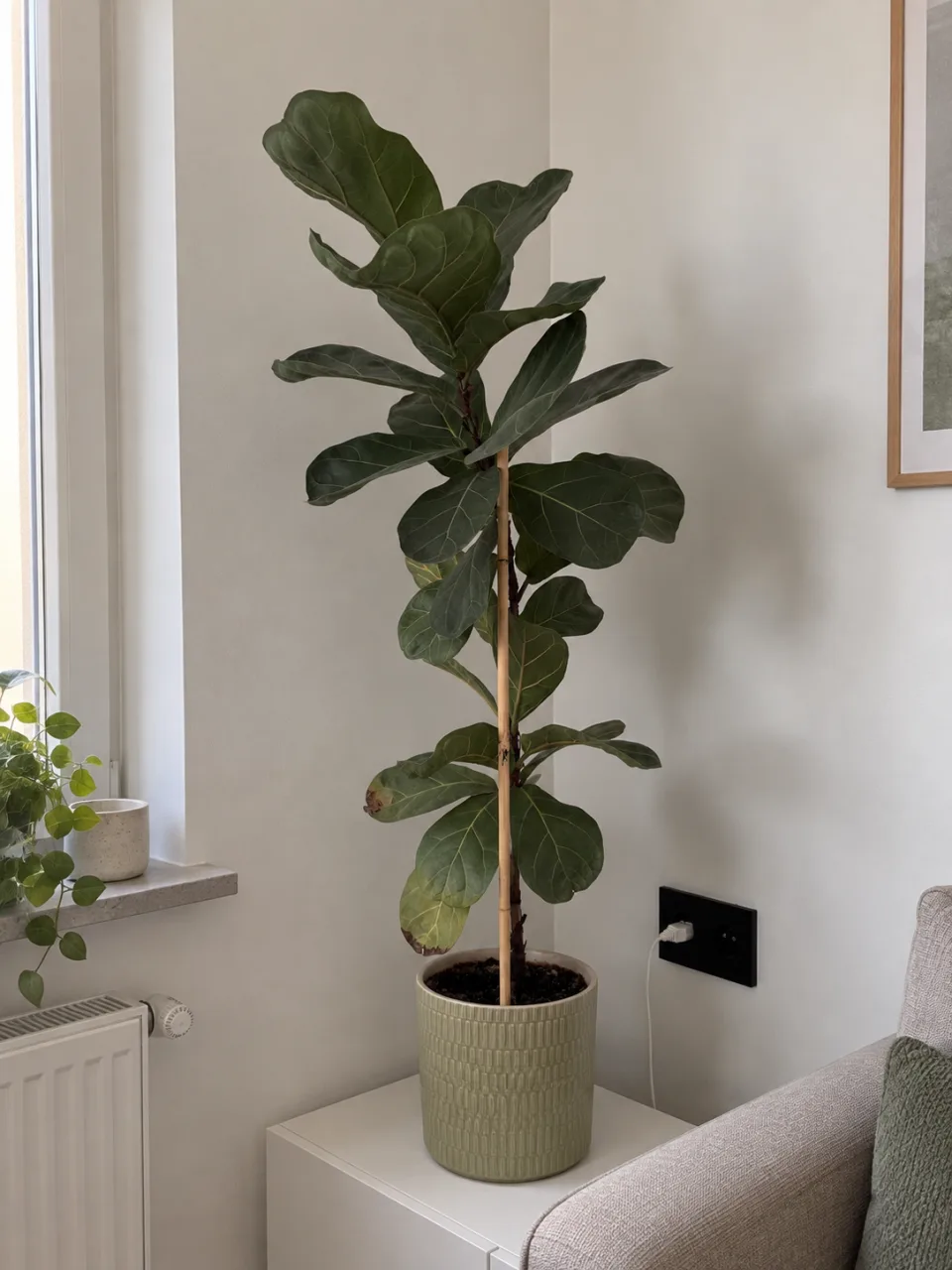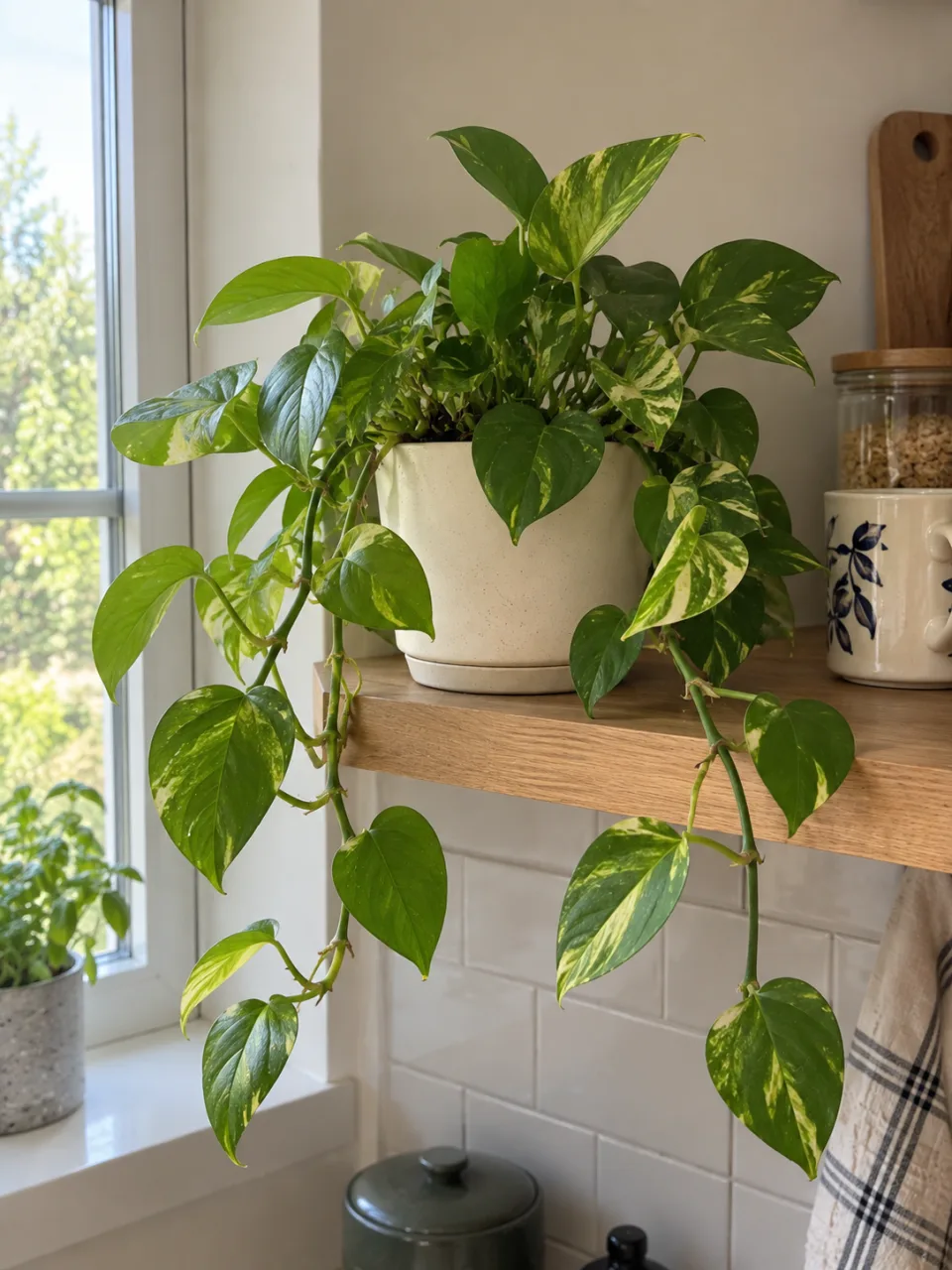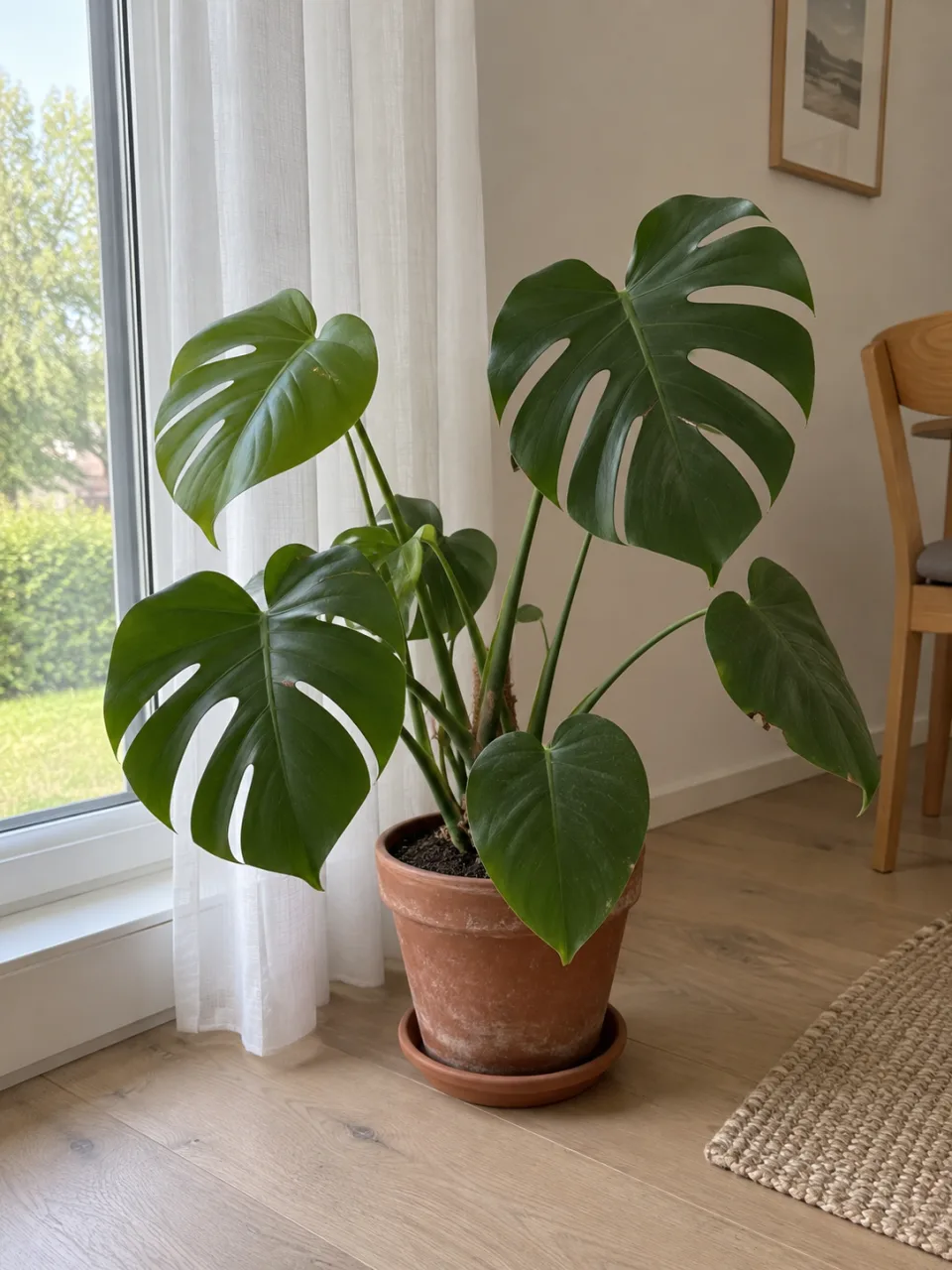
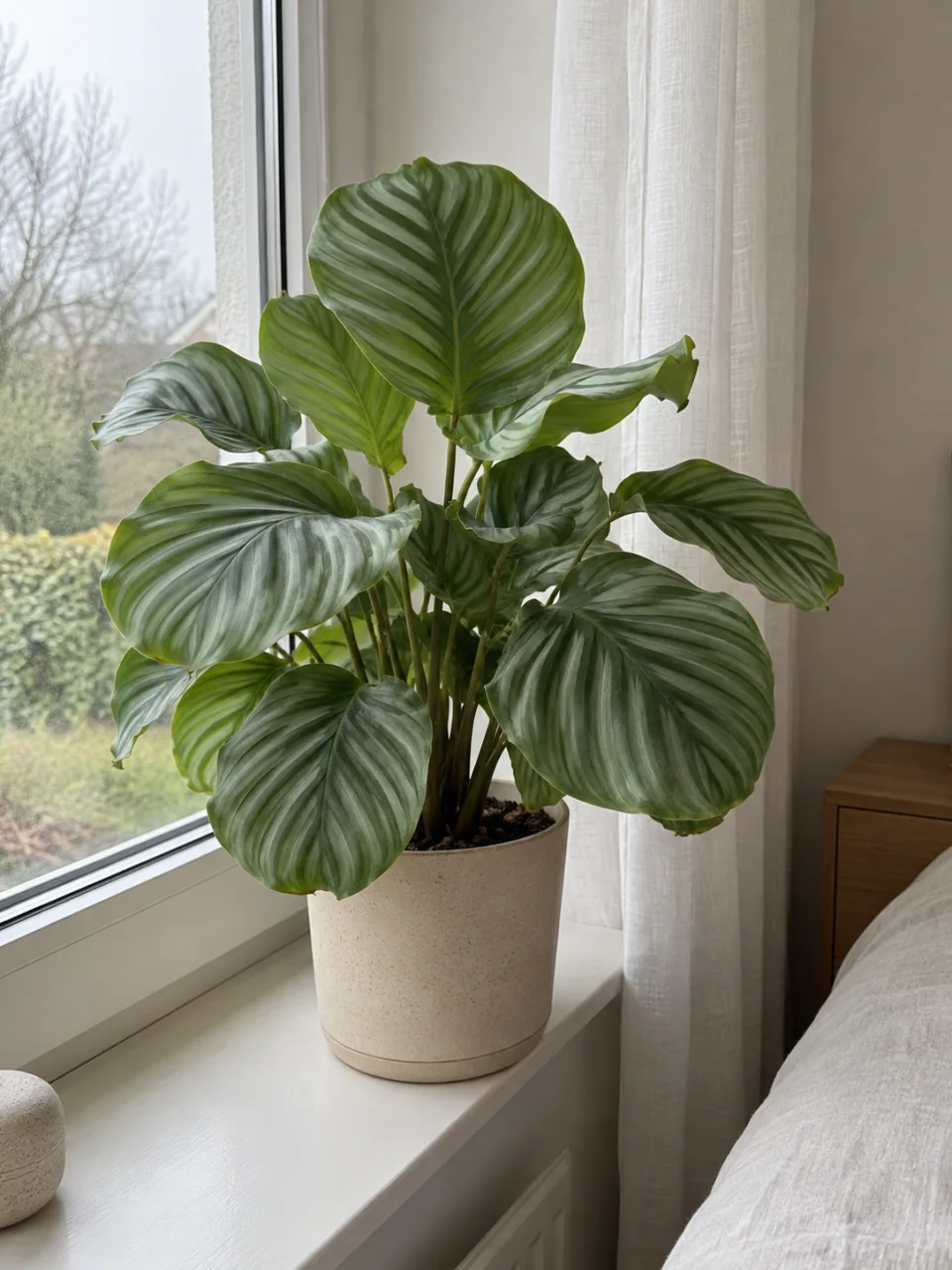
Look at the pattern
One older lower leaf can yellow as it ages. Several leaves changing quickly, especially with wilting or spots, deserve a closer look. Photograph the whole plant and both sides of affected leaves so you can compare what happens next.
Check moisture and drainage
Roots in constantly wet soil may struggle, but prolonged dryness can also cause yellowing. Feel the mix, lift the pot and inspect the saucer. Do not assume yellow means thirsty. If the mix stays wet for a long time, check drainage and root condition.
Review light and recent changes
A move, cold draught, strong direct sun or a very dark corner can affect leaves. Think about what changed before the symptoms appeared. Make one measured adjustment at a time. Damaged leaves may not turn green again; new growth is a more useful sign of recovery.
Inspect for pests before treating
Look under leaves and around stems for insects, webbing or sticky residue. Separate a plant with suspected pests from the collection while you identify the problem. Avoid routine sprays or fertiliser as a cure for an unexplained symptom.
Should I remove every yellow leaf?
Remove fully dead leaves with clean tools when they come away easily. A partly green leaf can still contribute to the plant. Fixing the underlying conditions matters more than removing the symptom.