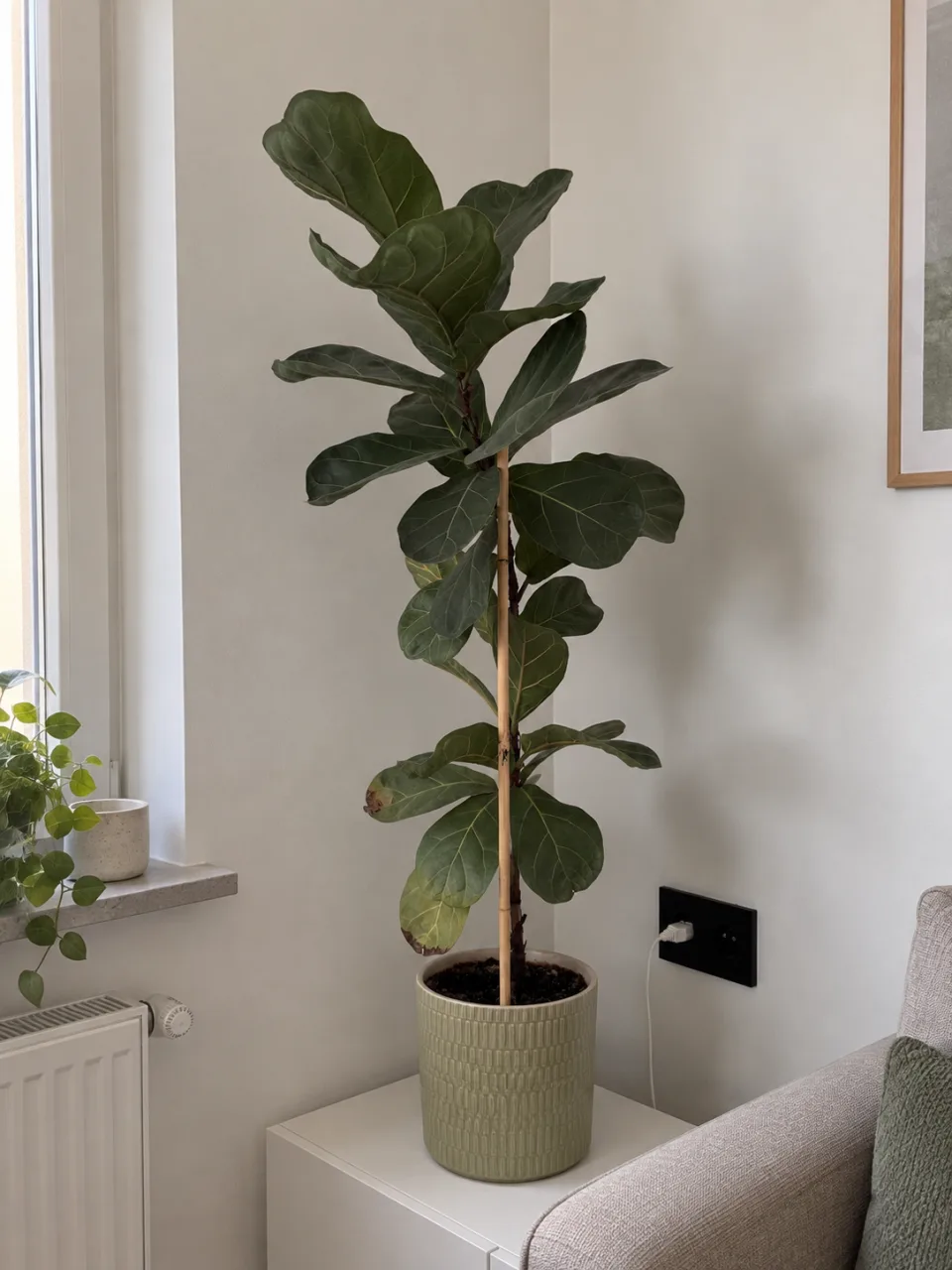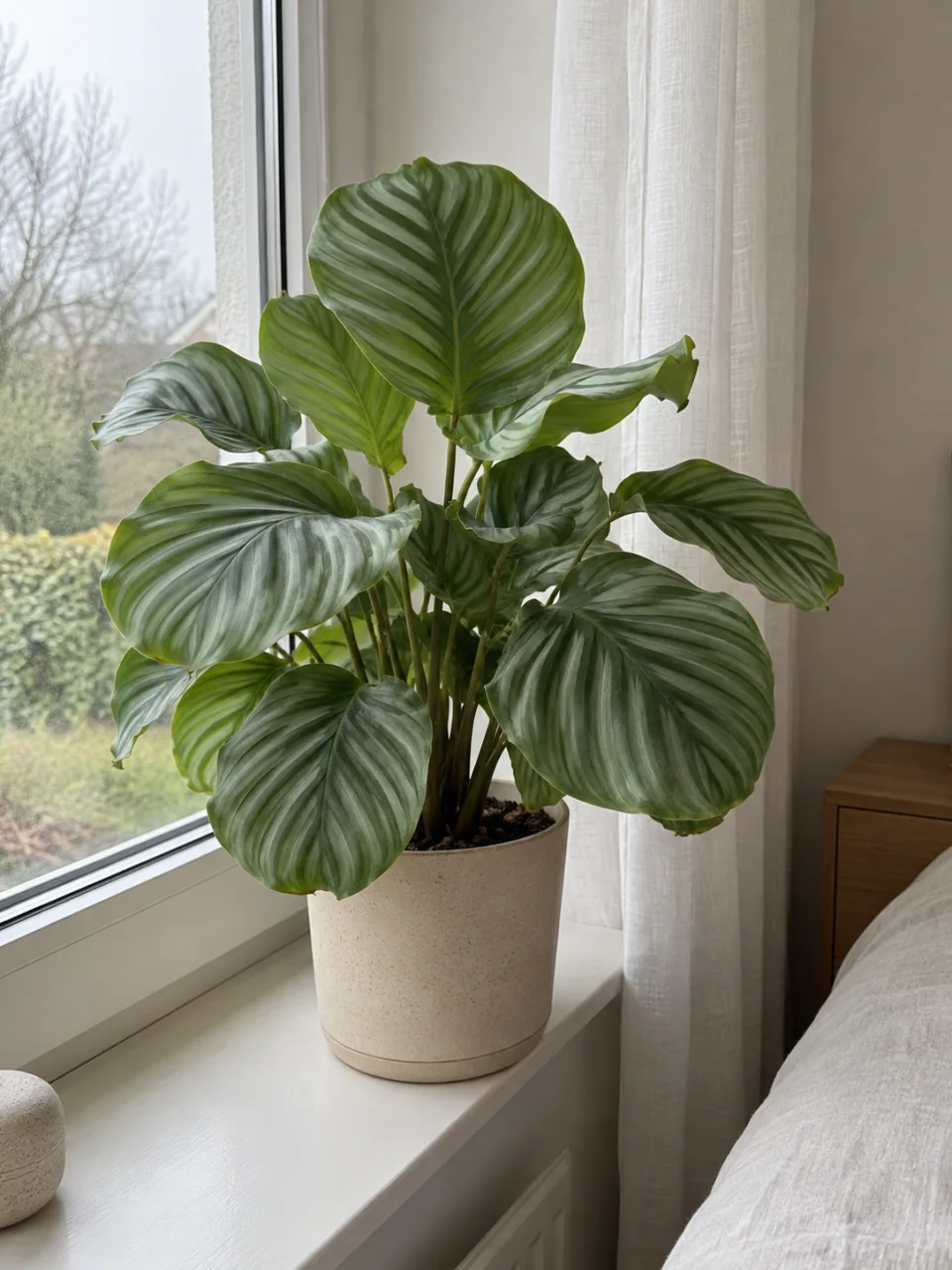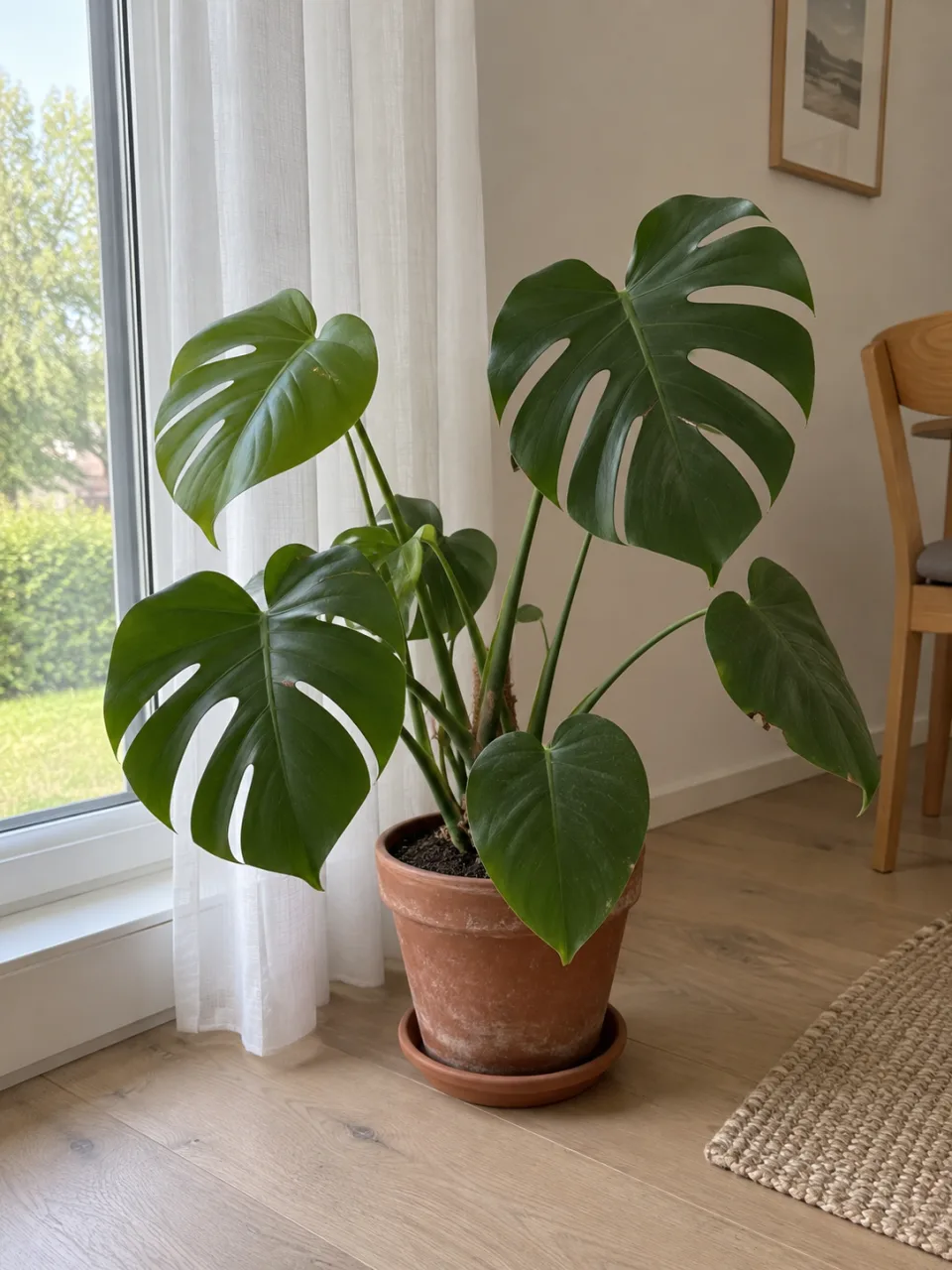
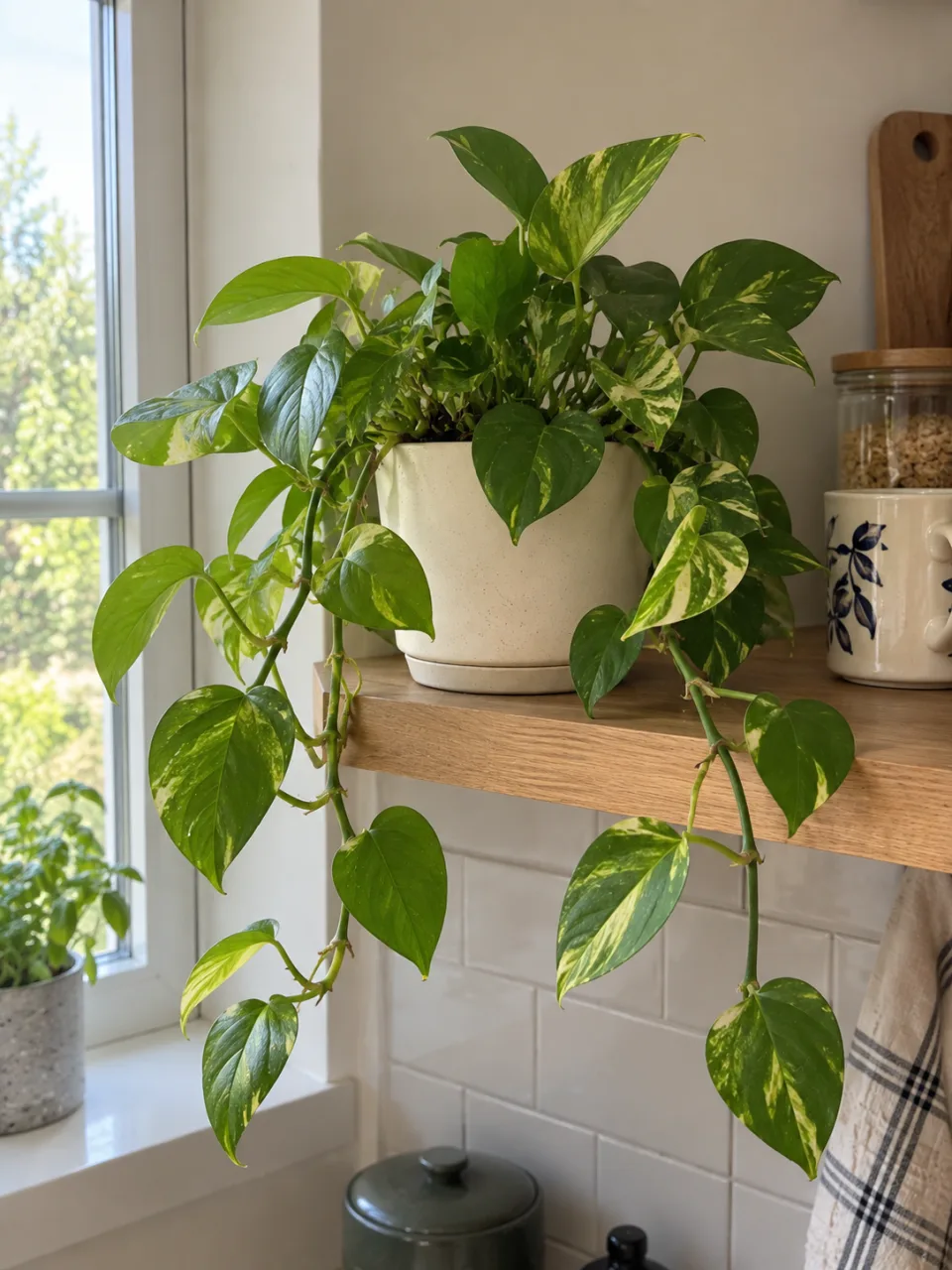
Watch the actual spot
Check the leaves’ position in the morning, around midday and later in the day. A crisp sunlit patch is direct light; daylight coming through the room without that beam is indirect. A room that looks bright to your eyes can still be dim for a plant deep inside it.
Account for the window and season
Buildings, trees, curtains and balconies change what reaches the glass. Window direction is a clue, not a complete answer, and the sun’s path varies with location and season. Revisit placement when the seasons change rather than relying on a compass label alone.
Move gradually
Plants used to a dim spot can scorch if suddenly moved into strong sun. Change exposure gradually and watch new growth and leaf colour. Stretched growth may be a sign to investigate light, but it is not proof by itself.
When daylight isn’t enough
If new growth stays small or stretched in a dim spot, consider moving the plant closer to a window. Where daylight is limited, a plant grow light can help. Choose one suited to indoor plants and follow its guidance on distance and hours of use. Give your plant time to adjust and watch the new leaves.
Does low-light tolerant mean a plant needs no light?
No. Low-light tolerance means a plant can cope with less light, usually with slower growth. It still needs light to live; an unlit room is not a permanent growing location.